
Sortir d’un bain effervescent et parfumé pour constater que la peau semble plus tiraillée, plus sèche ou plus réactive qu’avant l’immersion est une expérience couramment rapportée. La relation entre les bombes de bain et la sécheresse cutanée est nettement plus complexe que ne le laisse entendre le discours promotionnel, et le résultat dermatologique dépend largement de la formulation précise des ingrédients contenus dans le produit.
Réponse rapide : les bombes de bain peuvent-elles réellement hydrater la peau sèche ?
Oui — mais uniquement lorsque la formulation est adaptée. Les bombes de bain hydratantes enrichies en beurre de karité, en huiles végétales et en avoine colloïdale peuvent véritablement apaiser et adoucir la peau sèche, tandis que les versions riches en parfum ou à base de détergents altèrent souvent la barrière cutanée et aggravent la déshydratation.
Points clés en un coup d’œil
Les bombes de bain ne sont pas intrinsèquement hydratantes — les ingrédients déterminent tout.
Le beurre de karité, le beurre de cacao et les huiles végétales de support constituent la référence en matière de soin des peaux sèches.
Les parfums synthétiques, le SLS et les paillettes sont des facteurs courants qui aggravent la sécheresse cutanée.
La température de l’eau et la durée du bain comptent tout autant que la bombe de bain elle-même.
Appliquez un hydratant dans les 3 minutes suivant le séchage en tapotant pour retenir l’hydratation.
Comprendre la peau sèche et l’effet des produits de bain sur celle-ci
Quelles sont les causes de la peau sèche (xérose) ?
La peau sèche, médicalement appelée xérose, survient lorsque la barrière cutanée est altérée et perd de l’eau plus rapidement qu’elle ne peut être réhydratée — un processus appelé perte insensible en eau (TEWL). Les déclencheurs courants incluent le temps froid, une faible humidité, le vieillissement, les tensioactifs agressifs et une exposition prolongée à l’eau chaude.
Une barrière cutanée saine repose sur des lipides (céramides, cholestérol et acides gras) pour retenir l’hydratation. Lorsque ces lipides sont éliminés, la peau devient squameuse, tiraillée et réactive.
Comment les bains chauds affectent la barrière cutanée
L’eau au-dessus de 40°C (104°F) dissout les lipides naturels de la peau et accélère la perte d’hydratation. Les dermatologues recommandent régulièrement des bains tièdes à toute personne ayant la peau sèche ou sensible — une chaleur confortable, pas la chaleur d’un hammam.
Associez de l’eau chaude à une bombe de bain mal formulée, et vous obtenez les conditions idéales pour l’irritation.
La place des bombes de bain
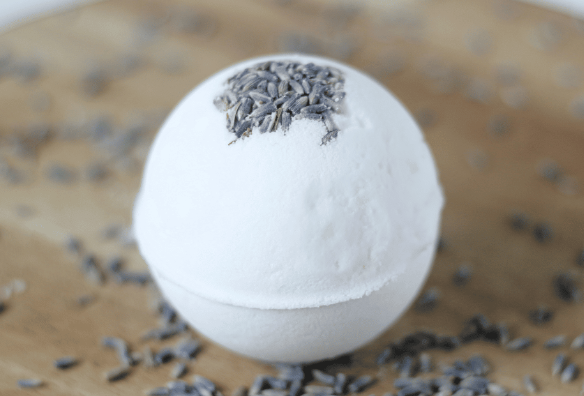
À la base, les bombes de bain ne sont rien d’autre que du bicarbonate de soude et de l’acide citrique qui pétillent au contact de l’eau. Tout le reste — beurres, huiles, parfum, colorants — est ajouté par le fabricant. Cela signifie que les bombes de bain sont essentiellement des vecteurs d’actifs : elles peuvent apporter à votre peau des ingrédients qui soutiennent la barrière cutanée, ou des agents irritants.
La science : les ingrédients qui aident ou aggravent la peau sèche
Les ingrédients bénéfiques pour la peau à rechercher
Beurre de karité, beurre de cacao et beurre de mangue
Ces beurres végétaux sont des émollients occlusifs — ils forment un fin film protecteur qui réduit la TEWL tout en reconstituant les lipides de surface. Les bombes de bain au beurre de karité sont particulièrement efficaces, car le karité est riche en acides stéarique et oléique qui imitent la propre composition lipidique de la peau.
Huiles végétales (amande douce, jojoba, coco, avocat)
L’huile de jojoba reproduit le sébum humain et s’absorbe facilement. Les huiles d’amande douce et d’avocat sont intensément nourrissantes pour les peaux très sèches. L’huile de coco est très occlusive, mais peut ne pas convenir aux peaux sujettes à l’acné — choisissez selon la réaction de votre peau.
Avoine colloïdale et extrait de noyau d’avoine
Reconnue par la FDA comme un protecteur cutané, l’avoine colloïdale apaise les démangeaisons, soutient la barrière cutanée et constitue l’une des options les plus sûres pour les peaux sensibles, squameuses ou sujettes à l’eczéma.
Huiles essentielles pour l’hydratation de la peau (utilisées correctement)
La lavande, la camomille romaine et l’encens peuvent offrir des bienfaits apaisants en aromathérapie lorsqu’ils sont dilués à moins de 1%. Point important : les huiles essentielles sont parfumées, mais non hydratantes — et des concentrations élevées peuvent en réalité irriter la peau sèche.
Sel d’Epsom et sels riches en magnésium
Les bains au sel d’Epsom peuvent soulager les tensions musculaires et offrir une exfoliation douce. Cependant, les sels peuvent être desséchants en grande quantité ; privilégiez donc des formules où les sels sont équilibrés par des beurres et des huiles.
Ingrédients pouvant aggraver la peau sèche
Parfums synthétiques et colorants
"Parfum" figure parmi les principales causes de dermatite de contact. Les colorants artificiels n’apportent aucun bénéfice à la peau et peuvent sensibiliser les barrières cutanées fragilisées.
SLS, SLES et tensioactifs agressifs
Le sodium lauryl sulfate et des détergents similaires — courants dans les bombes de bain produisant beaucoup de mousse — éliminent les lipides protecteurs et peuvent laisser la peau sèche à vif.
Excès d’acide citrique et formules à faible pH
Bien que l’acide citrique soit nécessaire à la réaction effervescente, des quantités excessives abaissent le pH de l’eau du bain en dessous des niveaux adaptés à la peau (5.5–7), perturbant le manteau acide.
Paillettes et additifs insolubles
Au-delà des préoccupations environnementales, les paillettes peuvent provoquer une irritation mécanique et des micro-abrasions sur une peau sèche déjà fragilisée.
Les bombes de bain sont-elles bonnes pour la peau sèche ? Verdict selon l’état de la peau
Peau légèrement sèche ou déshydratée
Généralement sûres — et même bénéfiques — lorsque vous choisissez des bombes de bain hydratantes avec des beurres comme ingrédients principaux. Limitez les bains à 15 minutes et hydratez la peau ensuite.
Peau très sèche, squameuse ou gercée
Procédez avec prudence. Privilégiez des formules sans parfum et riches en beurres. Si les gerçures sont ouvertes ou saignent, évitez complètement les bombes de bain jusqu’à la guérison de la peau.
Peau sujette à l’eczéma, au psoriasis ou à la rosacée
La plupart des dermatologues recommandent d’éviter les bombes de bain traditionnelles en période de poussée. Parmi les alternatives plus sûres figurent les bains à l’avoine colloïdale (comme les bains de type Aveeno nature) ou les additifs de bain sur ordonnance. Consultez toujours votre dermatologue avant d’introduire de nouveaux produits.
Peau sensible
Effectuez un test cutané en dissolvant un petit morceau de la bombe de bain dans de l’eau tiède et en l’appliquant sur l’intérieur de votre avant-bras pendant 24 heures. Privilégiez des formules minimalistes avec une liste d’ingrédients courte.
Comment choisir la meilleure bombe de bain hydratante : liste de contrôle en 6 étapes
Étape 1 : Lisez la liste complète des ingrédients INCI
Les termes "naturel", "clean" et "biologique" sont des termes marketing non réglementés. Seule la liste INCI (Nomenclature internationale des ingrédients cosmétiques) vous indique ce qu’il y a réellement à l’intérieur.
Étape 2 : Recherchez des beurres ou des huiles parmi les 5 premiers ingrédients
Les ingrédients sont classés par concentration. Si le beurre de karité apparaît en dernier, le produit n’en contient pratiquement pas.
Étape 3 : Évitez "Parfum" et les colorants artificiels
Particulièrement important pour les peaux sensibles ou réactives. Optez pour des produits colorés avec du mica ou des extraits botaniques et parfumés (légèrement) avec des huiles essentielles.
Étape 4 : Vérifier les mentions « testé dermatologiquement » ou « hypoallergénique »
Ces mentions ne sont pas juridiquement contraignantes, mais elles indiquent généralement que la marque a réalisé des tests de sensibilisation. Recherchez une transparence sur les dermatologues ou laboratoires ayant testé le produit.
Étape 5 : Vérifier une formulation au pH équilibré
Le pH idéal de l’eau du bain après dissolution se situe entre 5.5 et 7. Les marques réputées publient ces données — si une entreprise refuse de les communiquer, c’est un signal d’alerte.
Étape 6 : Prendre en compte la transparence de la marque et les avis de tiers
Les marques dignes de confiance publient l’origine complète des ingrédients, les tests par lot et des avertissements clairs concernant les allergènes. Vérifiez les affirmations à l’aide d’avis indépendants plutôt que de vous fier aux témoignages sélectionnés par la marque.
Comment utiliser des bath bombs en toute sécurité pour les peaux sèches : tutoriel étape par étape
Étape 1 : Préparer la peau avant le bain
Nettoyez délicatement si nécessaire, mais évitez les exfoliants physiques ou chimiques au préalable — ils augmentent le risque d’irritation.
Étape 2 : Régler la bonne température de l’eau
Visez 37–39°C (98–102°F). L’eau doit être chaude et réconfortante, jamais brûlante.
Étape 3 : Limitez le temps de trempage à 10–15 minutes
Au-delà de 15 minutes, la peau commence à perdre plus d’hydratation qu’elle n’en gagne, même dans une eau riche en huiles.
Étape 4 : Séchez en tapotant — ne frottez pas
Tapotez délicatement avec une serviette douce. Laissez un léger film d’huile sur la peau ; c’est votre barrière d’hydratation intégrée.
Étape 5 : Appliquez un hydratant dans les 3 minutes
Il s’agit de la technique "Soak and Seal" recommandée par la National Eczema Association. Utilisez une crème épaisse ou une pommade contenant des céramides, de la glycérine ou du beurre de karité pendant que la peau est encore humide.
Étape 6 : Recommandations de fréquence
Pour les peaux sèches, 1–2 bains avec bombe de bain par semaine suffisent largement. Une utilisation quotidienne — même de bombes de bain de haute qualité — peut fragiliser la barrière cutanée.
Alternative DIY : fabriquez votre propre bombe de bain hydratante à la maison
Recette de base pour peau sèche
1 tasse de bicarbonate de soude
½ tasse d’acide citrique
2 cuillères à soupe de beurre de karité fondu
1 cuillère à soupe d’huile d’amande douce
2 cuillères à soupe d’avoine colloïdale finement moulue
Facultatif : 5–8 gouttes d’huile essentielle de lavande
Mélangez soigneusement les ingrédients secs, puis versez en filet le beurre de karité fondu et les huiles tout en fouettant. Le mélange doit s’agglomérer lorsqu’on le presse. Tassez fermement dans des moules, démoulez après 1 heure et laissez durcir pendant 24 heures.
Conseils de personnalisation
Remplacez l’huile d’amande par du jojoba si votre peau est sujette à l’acné. Ajoutez 2 cuillères à soupe de lait entier en poudre pour plus de douceur. Supprimez totalement le parfum pour les peaux les plus sensibles.
Conservation et durée de vie
Conservez dans un récipient hermétique, dans un endroit frais et sec. Utilisez dans les 2–3 mois pour une efficacité optimale — les huiles peuvent s’oxyder et perdre de leur efficacité avec le temps.
Quand éviter complètement les bombes de bain
Meilleures options pour les peaux très sèches
Les huiles de bain, les bains simples à l’avoine colloïdale et les additifs de bain émollients apportent généralement plus de lipides que les bombes de bain et provoquent moins de réactions d’irritation. En cas de xérose sévère, il s’agit souvent de l’option privilégiée par les dermatologues.
Signes indiquant que vous devriez cesser d’utiliser des bombes de bain
Des démangeaisons persistantes, des rougeurs après le bain, une sensation de tiraillement durant plusieurs heures, une nouvelle desquamation ou des poussées d’eczéma indiquent qu’un produit ne vous convient pas. Cessez l’utilisation et consultez un dermatologue si les symptômes persistent au-delà de quelques jours.
Foire aux questions (FAQ)
Les bombes de bain hydratent-elles votre peau ?
Seules celles formulées avec des quantités significatives de beurres et d’huiles végétales procurent une hydratation mesurable. Les bombes de bain uniquement effervescentes (simplement du bicarbonate de soude, de l’acide citrique, du parfum et des colorants) n’offrent aucun véritable bénéfice hydratant.
Les bombes de bain peuvent-elles assécher la peau ?
Oui. Les bombes de bain contenant des parfums synthétiques, du SLS, de fortes concentrations d’acide citrique ou des colorants agressifs peuvent altérer la barrière cutanée et aggraver la sécheresse — en particulier en cas d’utilisation fréquente ou avec de l’eau chaude.
À quelle fréquence devrais-je utiliser des bombes de bain si j’ai la peau sèche ?
Une à deux fois par semaine constitue la recommandation générale, en utilisant une formule hydratante contenant des beurres et des huiles. Une utilisation quotidienne est rarement conseillée, même avec les formulations les plus douces.
Les bombes de bain de style Lush sont-elles sans danger pour la peau sèche ?
Cela dépend entièrement du produit en question. Certaines contiennent des quantités généreuses de beurre de cacao et d’huiles, tandis que d’autres sont riches en parfums synthétiques et en paillettes. Vérifiez toujours la liste des ingrédients plutôt que de vous fier à la réputation de la marque.
Dois-je me doucher après avoir utilisé une bombe de bain ?
Un rinçage rapide à l’eau tiède convient parfaitement — et c’est souvent une bonne idée — pour éliminer les résidus, les paillettes ou l’excès de sel. Évitez le savon pendant ce rinçage afin de ne pas retirer la couche d’huile bénéfique.
Les bombes de bain sont-elles sans danger pendant la grossesse ou pour les enfants ayant la peau sèche ?
Pendant la grossesse, évitez les bombes de bain contenant des huiles essentielles comme la sauge sclarée, le romarin et certaines huiles d’agrumes — consultez votre gynécologue-obstétricien pour obtenir une liste complète. Pour les enfants, choisissez des options sans parfum, sans colorant et sans paillettes, et surveillez-les afin d’éviter toute ingestion ou tout contact avec les yeux.
Qu’est-ce qui est préférable pour la peau sèche : les bombes de bain ou les huiles de bain ?
En cas de sécheresse sévère, les huiles de bain surpassent généralement les bombes de bain, car elles apportent une concentration plus élevée de lipides sans la charge en acide citrique et en bicarbonate de soude. En cas de sécheresse légère à modérée, une bombe de bain bien formulée peut être tout aussi efficace et plus agréable.
Recommandations finales
Alors, les bombes de bain sont-elles bonnes pour la peau sèche ? La réponse honnête : elles peuvent l’être — à condition de choisir avec soin. Recherchez des formules à base de beurre de karité, de beurre de cacao et d’huiles végétales ; évitez les parfums synthétiques, les tensioactifs agressifs et les paillettes ; gardez l’eau tiède ; et retenez toujours l’hydratation dans les trois minutes suivant la sortie du bain.
Considérez les bombes de bain comme un élément d’une routine de soin plus large pour la peau sèche — et non comme une solution miracle. Associez la bonne formulation à de bonnes habitudes de bain et à un hydratant de qualité après le bain, et vous transformerez le moment du bain d’un irritant potentiel en un véritable rituel apaisant et hydratant.