

Si quelqu’un vient juste de vous remettre un paquet de comprimés effervescents en vous disant qu’ils garderont votre gouttière de contention fraîche, vous vous demandez probablement quoi faire ensuite. Vous n’êtes pas seul. Ce guide s’adresse aux personnes qui portent une gouttière de contention et qui souhaitent adopter une routine claire et pratique pour garder leur appareil hygiénique, transparent et confortable à porter.
Vous trouverez ci-dessous une procédure simple étape par étape, des consignes de sécurité et des réponses aux questions les plus fréquentes des débutants — le tout dans un langage clair.
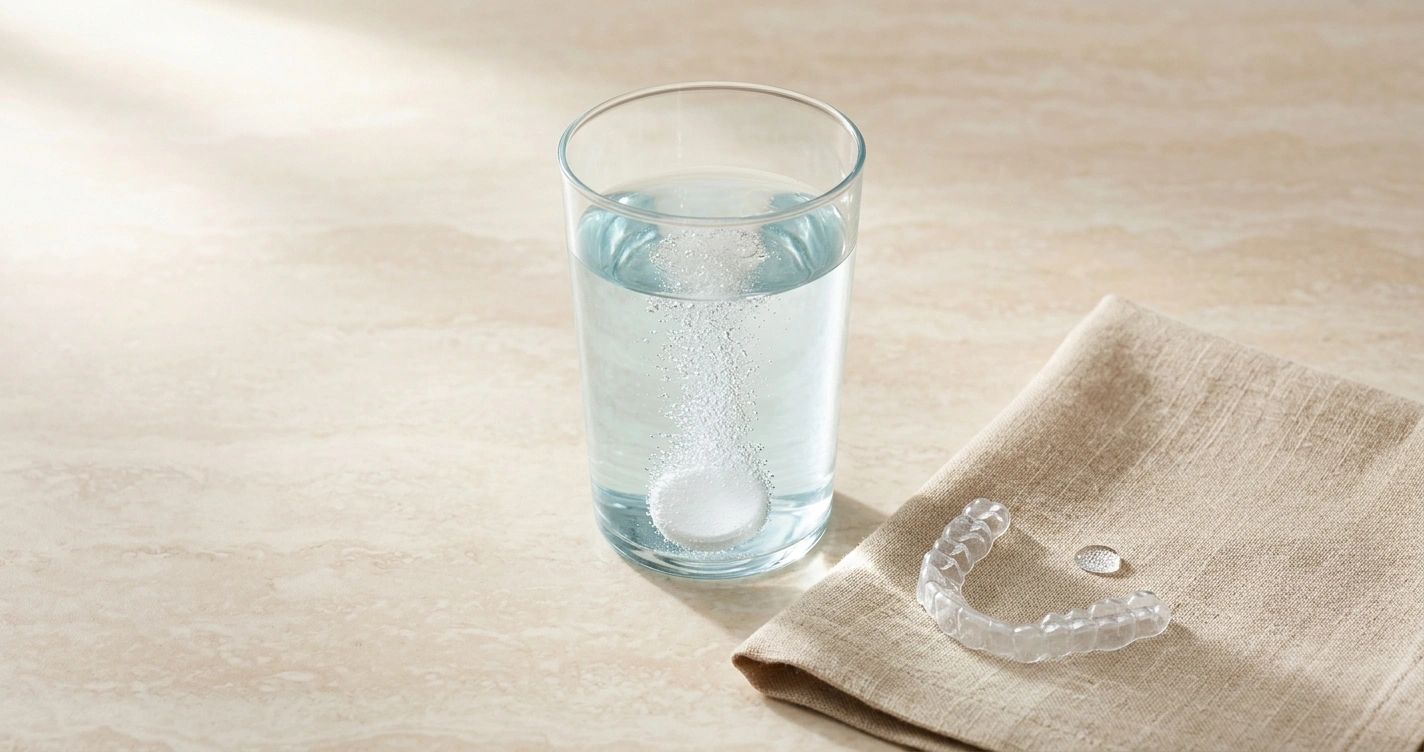
Que sont les comprimés nettoyants pour prothèses dentaires ?
Les comprimés nettoyants pour prothèses dentaires sont de petits comprimés effervescents qui se dissolvent dans l’eau et créent une solution nettoyante pétillante. Ils contiennent généralement du bicarbonate de sodium, de l’acide citrique et de légers agents oxydants. Ensemble, ces ingrédients délogent les résidus et réduisent les bactéries responsables des mauvaises odeurs.
Le nom indique "prothèse dentaire", mais la même solution nettoyante effervescente fonctionne très bien sur les gouttières de contention, les protège-dents et les aligneurs transparents. La chimie ne fait pas de distinction — elle nettoie la plupart des appareils buccaux amovibles tout aussi efficacement.
Pourquoi les porteurs de gouttières de contention utilisent des comprimés nettoyants pour prothèses dentaires
Les gouttières de contention présentent de minuscules rainures et contours qu’une brosse seule ne peut pas atteindre complètement. L’action effervescente des comprimés nettoyants pour prothèses dentaires déloge les particules alimentaires, la plaque et le biofilm de ces zones difficiles d’accès.
Un trempage rapide est souvent plus rapide et plus efficace qu’un brossage. Il aide également à préserver l’aspect et la fraîcheur de l’appareil.
Types de gouttières de contention que vous pouvez nettoyer avec des comprimés
Gouttières de contention Hawley — le modèle en fil métallique et en acrylique, généralement compatible avec les comprimés.
Gouttières de contention en plastique transparent (Essix) — généralement sûres avec des temps de trempage plus courts.
Gouttières de contention de type aligneur — compatibles avec la plupart des comprimés, mais vérifiez toujours l’étiquette.
Si votre gouttière de contention comporte des matériaux ou des attaches inhabituels, consultez les instructions d’entretien du fabricant avant le trempage.
Comment les comprimés nettoyants pour prothèses dentaires agissent sur les gouttières de contention
Le principe scientifique derrière l’effervescence est simple. Lorsque le comprimé entre en contact avec l’eau, il libère de minuscules bulles d’oxygène et crée une solution légèrement alcaline qui ramollit et décolle les dépôts.
Le rôle de l’effervescence dans le décollement des débris
Ces bulles ascendantes accomplissent un véritable travail. Elles agitent physiquement la surface de la gouttière de contention et atteignent les creux auxquels les poils d’une brosse accèdent difficilement. Cela aide à éliminer la plaque des gouttières de contention sans brossage agressif susceptible de rayer le matériau.
Action antibactérienne et contrôle des odeurs
Les ingrédients actifs réduisent également les bactéries responsables de cette odeur désagréable de gouttière. Le résultat est un appareil plus frais au toucher — les pastilles sont un outil de nettoyage, et non un traitement pour une affection buccale.
Étape par étape : comment utiliser des pastilles nettoyantes pour prothèses dentaires pour les gouttières
Voici la routine que vous pouvez suivre dès la toute première utilisation. La plupart des personnes terminent l’ensemble du processus en moins de 15 minutes.
Étape 1 — Rincez la gouttière sous l’eau fraîche
Tenez votre gouttière sous l’eau courante fraîche pour éliminer la salive et les particules détachées. Ce prérinçage aide la solution de trempage à agir plus efficacement.
Étape 2 — Remplissez un récipient propre d’eau tiède
Utilisez un verre propre ou votre récipient de trempage pour gouttière. L’eau doit être tiède — jamais chaude. L’eau chaude peut déformer les gouttières transparentes en plastique et même faire perdre leur forme aux appareils en acrylique plus robustes.
Étape 3 — Déposez une pastille nettoyante pour prothèses dentaires
Une pastille par trempage est la norme. Attendez qu’elle soit complètement dissoute et que l’effervescence soit retombée avant d’immerger la gouttière (ou placez d’abord la gouttière dans l’eau — les deux méthodes fonctionnent).
Étape 4 — Faites tremper pendant la durée recommandée
La plupart des produits recommandent un trempage de 5 à 15 minutes. Vérifiez toujours l’étiquette de votre pastille spécifique. Faire tremper des gouttières orthodontiques plus longtemps que recommandé ne les rendra pas plus propres — et peut, avec le temps, altérer certains matériaux plastiques.
Étape 5 — Brossez délicatement avec une brosse à dents souple
Après le trempage, utilisez une brosse à dents à poils souples (une brosse dédiée, pas votre brosse habituelle) pour nettoyer délicatement la gouttière. Cela élimine tout film résiduel que la solution a décollé. N’utilisez pas de dentifrice — il est trop abrasif pour les surfaces de la gouttière.
Étape 6 — Rincez soigneusement avant de la porter
Rincez votre gouttière sous l’eau courante fraîche pendant რამდენიმე secondes. Cette étape est essentielle. Tout résidu de solution de nettoyage peut provoquer une irritation buccale ou laisser un goût désagréable.
À quelle fréquence faut-il faire tremper votre gouttière ?
Pour la plupart des gens, un trempage avec une pastille deux ou trois fois par semaine est largement suffisant. Les personnes qui la portent tous les jours peuvent bénéficier de trempages plus fréquents. Les utilisateurs qui la portent uniquement la nuit peuvent souvent se contenter de moins.
Nettoyage léger quotidien vs. nettoyage en profondeur hebdomadaire
Un rinçage rapide et un brossage délicat avec un savon doux suffisent parfaitement pour le nettoyage quotidien. Réservez le trempage avec une pastille aux séances de nettoyage en profondeur quelques fois par semaine, ou dès que votre gouttière commence à avoir un aspect ou une odeur inhabituels.
Signes indiquant que votre gouttière doit être nettoyée plus tôt
- Aspect trouble ou terne
- Film blanc ou dépôt crayeux
- Odeur persistante
- Débris visibles dans les rainures
Conseils de sécurité pour nettoyer les prothèses dentaires et les gouttières de contention en toute sécurité
Les comprimés sont faciles à utiliser, mais quelques habitudes de sécurité protégeront votre gouttière de contention contre les dommages accidentels et vous aideront à nettoyer les prothèses dentaires en toute sécurité.
Ne jamais faire tremper dans de l’eau chaude ou bouillante
La chaleur déforme rapidement les gouttières de contention thermoplastiques. Utilisez de l’eau tiède — agréable au toucher, sans être fumante.
Ne placez pas les comprimés directement dans la bouche
Les comprimés de nettoyage pour prothèses dentaires sont uniquement destinés au trempage. Ne les mâchez pas, ne les avalez pas et ne les utilisez pas comme substitut de bain de bouche.
Gardez les comprimés et la solution hors de portée des enfants et des animaux domestiques
Conservez les comprimés dans un endroit sec et en hauteur. Si quelqu’un en avale un accidentellement, contactez immédiatement le centre antipoison ou demandez un avis médical.
Évitez de mélanger avec d’autres agents nettoyants
Ne mélangez jamais les comprimés avec de l’eau de Javel, du vinaigre, un bain de bouche ou des nettoyants ménagers. La combinaison de produits chimiques peut dégager des fumées nocives ou endommager votre gouttière de contention.
Rincez soigneusement à chaque fois
Des résidus de solution peuvent irriter vos gencives, votre langue ou l’intérieur de vos joues. Un rinçage soigneux après chaque trempage est indispensable.
Surveillez les réactions allergiques ou les sensibilités
Si vous remarquez une irritation, un goût inhabituel persistant ou toute autre réaction, cessez d’utiliser le produit. Consultez votre dentiste ou votre médecin avant de continuer.
Quand remplacer votre gouttière plutôt que de la nettoyer
Des fissures, un jaunissement tenace qui ne disparaît pas, une déformation ou un mauvais ajustement indiquent tous une seule chose : vous avez besoin d’un remplacement, pas d’un nettoyage supplémentaire. Une gouttière endommagée abrite des bactéries qu’aucun bain de trempage ne peut éliminer complètement.
Erreurs courantes commises par les débutants
Utiliser trop de comprimés à la fois
Plus d’effervescence ne signifie pas plus de pouvoir nettoyant. Utilisez un comprimé par trempage, comme indiqué.
Laisser tremper toute la nuit par défaut
On suppose souvent que des trempages plus longs sont plus efficaces. Pour les gouttières — en particulier celles en plastique transparent — un trempage prolongé n’est généralement pas recommandé et peut altérer le matériau au fil du temps.
Sauter l’étape du brossage
Les comprimés délogent les dépôts. C’est une brosse douce qui les enlève physiquement. Si vous sautez cette étape, vous constaterez souvent qu’un léger film reste en place.
Réutiliser une ancienne solution de trempage
La solution utilisée contient les bactéries et les débris que vous venez de nettoyer. Commencez chaque session avec de l’eau fraîche et une pastille neuve.
Méthodes de nettoyage alternatives et complémentaires
Savon doux et brossage délicat
Une goutte de liquide vaisselle non parfumé et une brosse à dents souple constituent une excellente routine quotidienne entre les trempages avec pastille.
Pastilles de nettoyage spécifiques aux gouttières de contention
Les pastilles de nettoyage pour gouttières de contention sont formulées avec des temps de trempage plus courts et une composition généralement plus douce, adaptée aux appareils en plastique fin. Si vous portez une gouttière transparente, elles méritent d’être envisagées.
Méthodes à éviter
- Dentifrice — abrasif et raye la surface.
- Eau bouillante — déforme et abîme la plupart des gouttières de contention.
- Eau de Javel ou nettoyants ménagers agressifs — nocifs et potentiellement dangereux.
Ranger votre gouttière de contention entre les nettoyages
Utilisez un étui ventilé pour gouttière de contention
Un étui ventilé permet à la gouttière de sécher entre chaque utilisation, ce qui limite la prolifération bactérienne. Essuyez également régulièrement l’étui pour le garder propre.
Gardez-la à l’écart des sources de chaleur
Ne laissez pas votre gouttière sur le tableau de bord d’une voiture, sur un rebord de fenêtre ensoleillé ou près de surfaces chaudes dans la salle de bain. La chaleur est le moyen le plus rapide d’altérer l’ajustement d’une gouttière.
Entretien des dentiers vs. entretien des gouttières : principales différences
Si vous vivez avec une personne qui porte un dentier, il est utile de savoir que l’entretien approprié des dentiers et celui des gouttières ne sont pas la même chose.
Différences de matériaux
Les dentiers associent généralement de l’acrylique et du métal, tandis que les gouttières peuvent utiliser des plastiques plus fins et plus sensibles à la chaleur. Cette différence influe sur le niveau de trempage et de brossage que chacun peut supporter.
Variations de durée de trempage
Les dentiers peuvent souvent supporter des durées de trempage plus longues que les gouttières. Si vous portez une gouttière, respectez la durée la plus courte de la plage recommandée, sauf si l’emballage indique explicitement le contraire.
Réflexions finales sur la bonne désinfection des gouttières dentaires
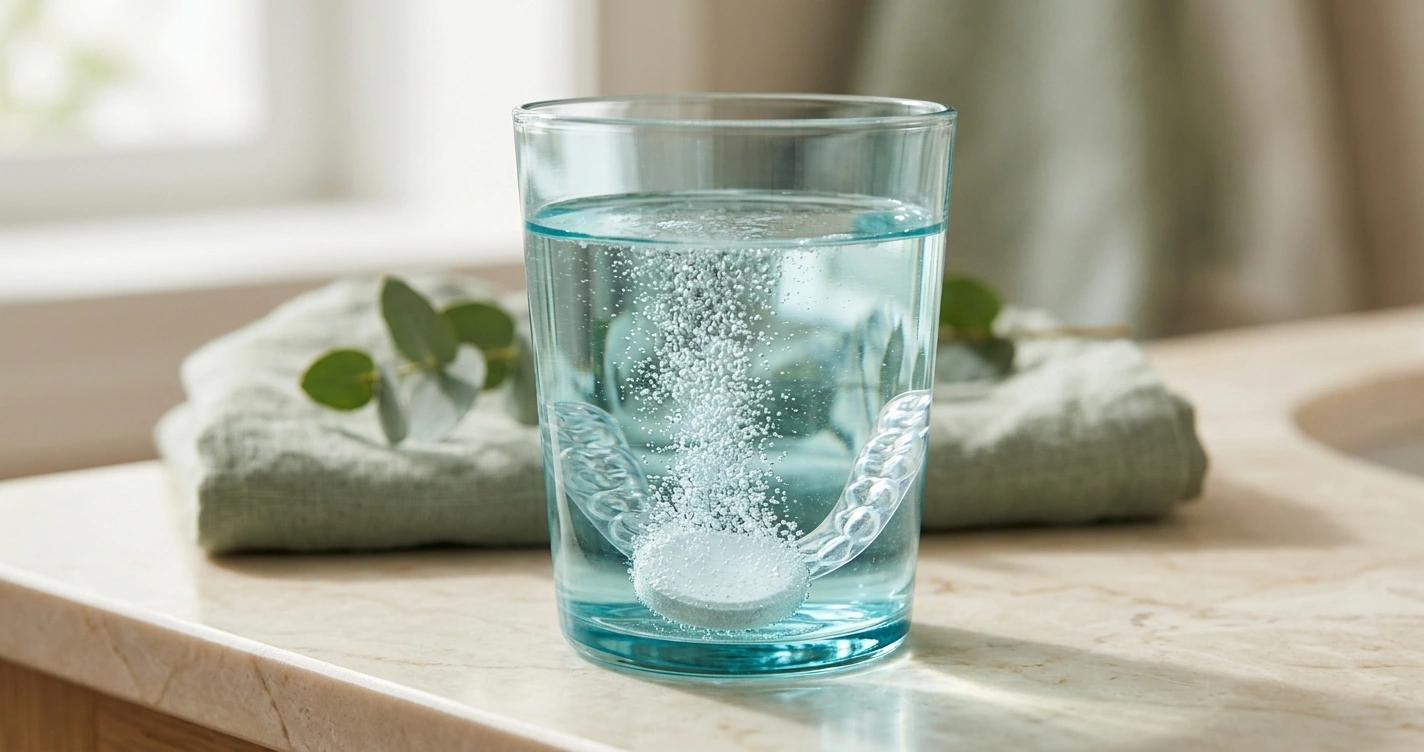
Maintenir votre gouttière dans un état hygiénique n’a rien de compliqué. La routine essentielle est simple : rincer, faire tremper dans une solution effervescente fraîchement préparée, brosser délicatement, rincer à nouveau — puis ranger dans un étui propre et ventilé.
Utilisez de l’eau tiède, respectez la durée de trempage indiquée sur l’étiquette et n’utilisez jamais les pastilles dans votre bouche. Adoptez cette habitude, faites preuve d’un peu d’attention, et votre gouttière restera plus claire, plus fraîche et plus confortable à porter aussi longtemps que nécessaire.
FAQ
Q : Puis-je utiliser des pastilles nettoyantes pour prothèses dentaires sur des gouttières transparentes en plastique ?
R : Dans la plupart des cas, oui — mais choisissez des pastilles indiquées comme sûres pour les gouttières de contention, les aligneurs ou les appareils transparents. Limitez le temps de trempage afin de protéger le plastique.
Q : Combien de temps dois-je laisser tremper ma gouttière de contention dans la solution ?
R : La plupart des pastilles recommandent 5 à 15 minutes. Suivez toujours les indications figurant sur l’emballage, car les formulations varient.
Q : Les pastilles pour prothèses dentaires peuvent-elles blanchir une gouttière jaunie ?
R : Les pastilles peuvent raviver l’apparence et éliminer les dépôts de surface, mais elles ne supprimeront pas les taches permanentes, la décoloration profonde ni les rayures. Si votre gouttière de contention semble usée, le remplacement est généralement la meilleure option.
Q : Les pastilles nettoyantes pour prothèses dentaires sont-elles sûres pour un usage quotidien ?
R : De nombreux produits sont conçus pour une utilisation régulière, mais un trempage quotidien n’est pas toujours nécessaire. Quelques fois par semaine suffisent pour la plupart des porteurs de gouttière de contention — consultez les instructions de votre produit pour plus de précisions.
Q : Puis-je laisser tremper ma gouttière de contention toute la nuit ?
R : Ce n’est généralement pas recommandé. Un trempage prolongé peut affecter certains matériaux plastiques, et un trempage de 5–15 minutes suffit habituellement. Si vous devez occasionnellement la laisser tremper plus longtemps, utilisez plutôt de l’eau claire.
Q : Que dois-je faire si ma gouttière de contention sent encore mauvais après le trempage ?
R : Essayez de brosser plus soigneusement après le trempage, recommencez avec une nouvelle pastille et assurez-vous que votre étui de rangement est propre. Si l’odeur persiste, votre appareil de contention peut présenter un dépôt permanent — demandez à votre orthodontiste s’il convient de le remplacer.
Q : Ces pastilles sont-elles les mêmes que les pastilles de bain de bouche ?
R : Non. Les pastilles nettoyantes pour prothèses dentaires sont strictement destinées au trempage des appareils. Ne les utilisez jamais dans la bouche, pour le rinçage ou pour être avalées.
Q : Quand dois-je contacter mon dentiste ou mon orthodontiste ?
R : Contactez-les si vous remarquez des dépôts persistants qui ne partent pas au nettoyage, des fissures ou dommages, un changement d’ajustement, ou une gêne lors du port de votre appareil de contention. Votre orthodontiste pourra vous conseiller sur le nettoyage, la réparation ou le remplacement.