
Persimmon soap is mostly a positioning decision, and the bar underneath is often closer to a regular one than buyers expect. That is the first thing to understand when you weigh persimmon soap vs regular body soap for a private label range. One trade-off runs through every choice below: a stronger story against a heavier burden of proof.
Short Verdict First
Persimmon soap suits brands that want a distinct ingredient story and can back each claim with paperwork. A regular body soap suits brands that compete on scent, price or simplicity. The answer shifts if your market is strict on claims or your margin is thin, because the extra story then costs more than it earns.
Think of it as a swap. You give up some formulation simplicity and gain a talking point. Whether that is a good swap depends on how much documentation you can carry, how stable the colour and scent stay on shelf, and whether your customers care about the ingredient at all.
If you are still deciding, read the compliance section before the positioning section. It tends to settle the question faster.
What Persimmon Soap Contains
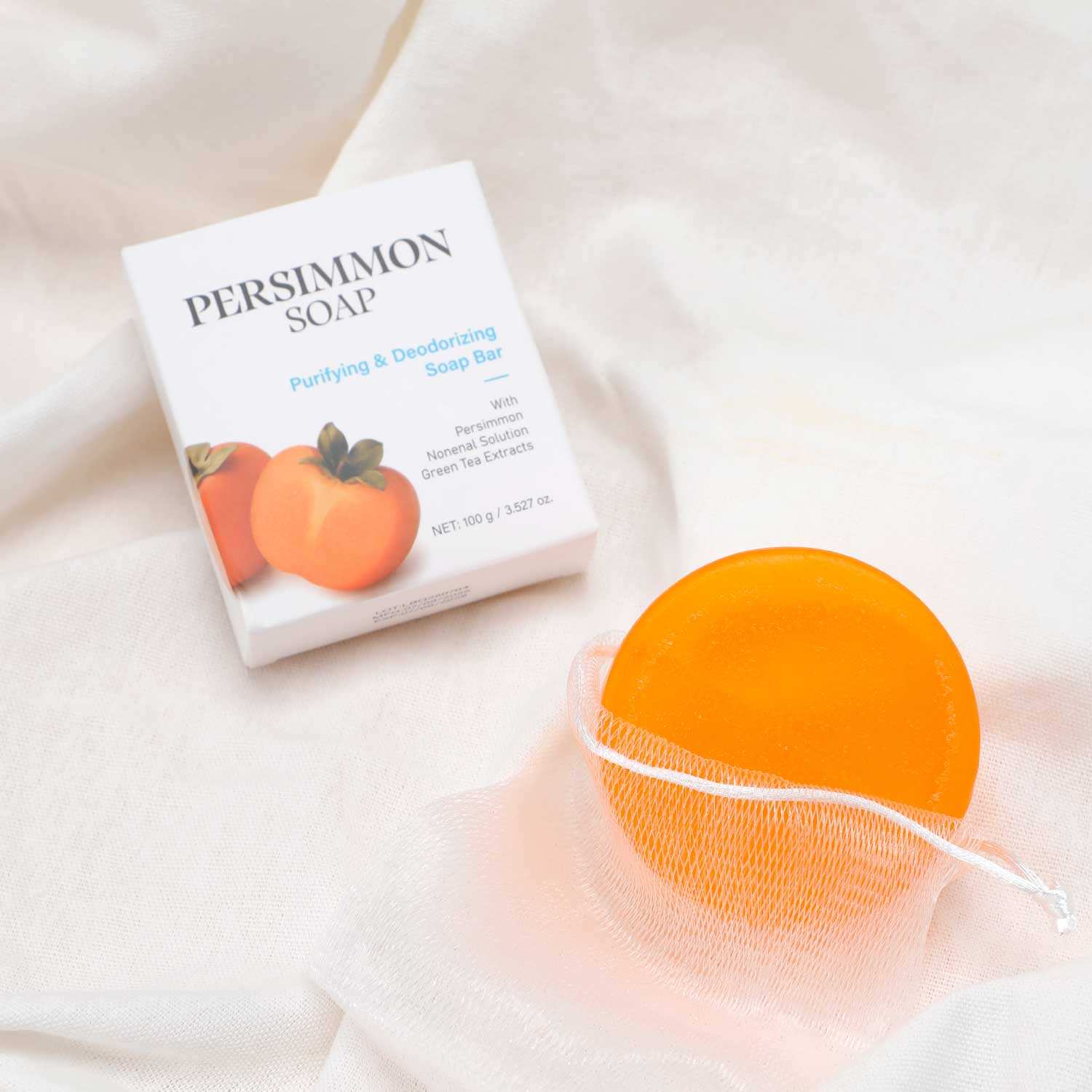
Persimmon soap is a cleansing bar that includes persimmon extract or a persimmon-derived ingredient in an otherwise ordinary soap or syndet base. A syndet bar is a synthetic-detergent bar made from mild surfactants rather than saponified fats. The extract is an additive, usually at a low level, not the base. That is why the INCI list of a persimmon bar often looks much like a regular bar with one or two extra plant lines. INCI names for persimmon-derived materials vary by supplier and by which part of the plant is used, so check the exact name on each supplier's specification sheet.
Extract Forms Used
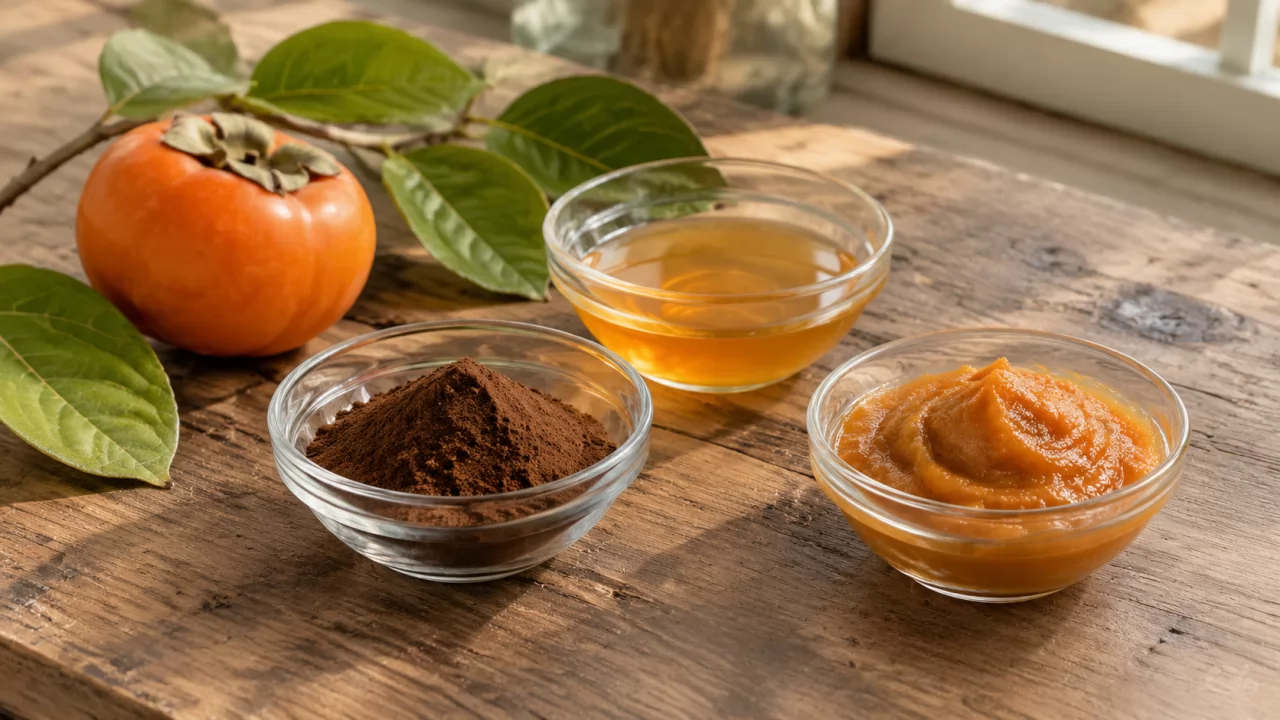
Suppliers commonly offer leaf extract, fruit extract, fruit juice or tannin-rich fractions. They are not interchangeable. Each one changes the colour of the bar, its scent and how it behaves over months. Tannin-rich material, for example, tends to be darker and more astringent in smell than a mild fruit extract. Ask which form is actually being quoted before you compare prices.
Base Types
Persimmon can sit on any base. Cold process and hot process soaps are made by saponification. Melt-and-pour uses a pre-made glycerin base that is melted, coloured and moulded. Syndet bars use synthetic surfactants and often allow tighter control of mildness and pH. The base you pick matters more to skin feel than the extract does.
Formulation Differences
On paper the two products differ in a few places only. The base can be identical. The pH range follows the base type, not the extract. What changes is the additive load, how the colour behaves, how much work the fragrance has to do, and what stability checks you should insist on. Extract level is a judgement call: too little and the ingredient is a label line only, too much and you meet colour, odour and compatibility problems. I would not quote a percentage without a supplier's guidance for that specific extract.
Extract Load and Colour Stability
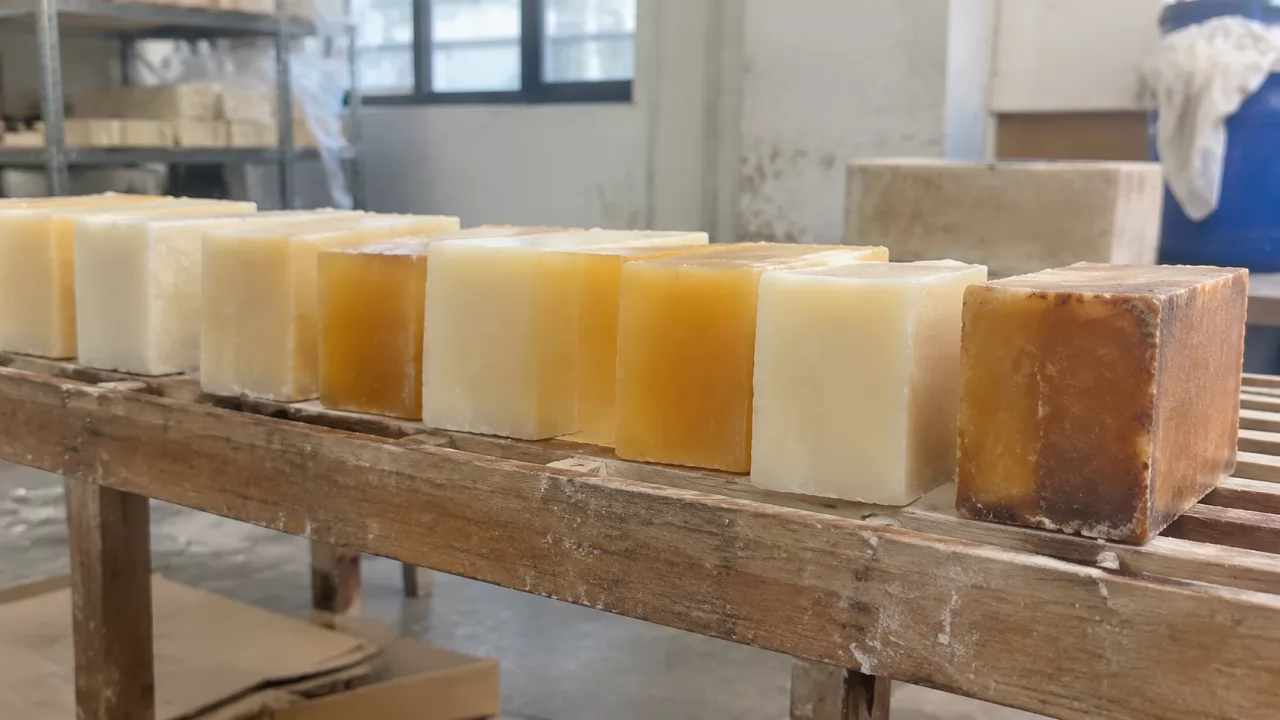
Plant extracts can darken or shift hue over time, especially under light, heat or in the presence of certain fragrance components. A bar that leaves the line pale tan may look different after months in a warehouse. This affects shelf-life planning and packaging. Opaque wrap or a carton protects colour better than a clear window. Run stability tests on the finished bar in its final pack, not on a lab sample in a jar.
Scent Masking
Many plant extracts carry their own smell, and it is rarely the one customers want. So fragrance work often goes into covering it. In practice the fragrance, not the extract, decides how consumers judge the bar when they pick it up. That is worth saying plainly to your marketing team.
The table below sets the two side by side. The main takeaway: persimmon adds checks and fragrance work, not a different manufacturing method.
| Criterion | Regular body soap | Persimmon soap |
|---|---|---|
| Base | Any soap or syndet base | Same bases possible |
| Key additive | Fragrance, colour | Persimmon extract plus fragrance |
| Colour risk | Lower | Higher, extract may darken |
| Fragrance need | Chosen for appeal | Also needed to mask extract odour |
| Stability checks | Standard set | Standard set plus colour and odour over time |
| Cost driver | Base and fragrance | Extract grade and added testing |
Where Positioning Splits
A regular bar usually sells on freshness, moisture feel, scent or value. Persimmon soap is usually framed around a traditional ingredient and a cleansing routine for people who care about body odour. Both stories are fine for a cleansing product. The risk starts when the persimmon story drifts toward what the product does to the body instead of what it does on the skin surface.
How to Position Persimmon Soap for Body Odour Care
Describe it as a cleansing bar for people who care about body odour, not as a treatment for it. Cleansing removes sweat and surface residue, and that is a claim a wash-off product can reasonably support. Saying it fights the cause of odour, or changes how the body works, pushes you toward drug territory in some markets. On pack, keep the wording plain: ingredient name, cleansing purpose, scent description, how to use.
Avoid cure, treat, detox and "all-natural" wording unless you hold proof for that exact formula. One strong adjective on the front panel can turn a cosmetic into a regulatory problem.
Claims and Compliance
This is the heaviest trade-off. A persimmon story invites more claims, and every claim needs support. A regular bar makes fewer promises and so needs less behind it.
The frameworks differ by market, in general terms. In the US, soap and cosmetics fall under different rules depending on how the product is described, and a claim to affect the body's function can move it toward drug status. In the EU, Regulation (EC) No 1223/2009 requires a safety assessment, a Responsible Person, a product information file and full ingredient labelling. Gulf markets generally follow their own registration and labelling requirements, often with Arabic-language label rules, so check the current rules for each country before printing packaging. Treat all of this as orientation, not legal advice, and confirm with a regulatory specialist.
Documents to Request
Before approving a persimmon formula, ask the supplier for the full INCI list, the safety assessment inputs, stability and preservation data for the finished bar, and the specification sheet for the extract itself. The extract sheet should name the plant part, the carrier or solvent and any preservative in it. Without that, your own INCI list may be wrong.
Patch Testing and Skin Types
Statements about skin tolerance need test reports behind them. Plant extracts are a common source of sensitivity concerns, so do not write "gentle" or "suitable for sensitive skin" on the strength of the ingredient's reputation. Patch testing is a controlled check on a small group of volunteers, done by a qualified lab, and its result applies to that exact formula. Change the extract or fragrance and the report no longer covers it.
Here is the honest balance sheet.
Persimmon soap, compared with a regular bar, offers:
- A clear ingredient story that stands out on a shelf or listing
- Room for a higher price point if the story is believed
- A reason for repeat purchase among people who like the scent and routine
It also brings:
- More claim risk and more paperwork
- Possible colour drift that shortens usable shelf life
- Extra cost from the extract and added testing
- Fragrance work to cover the extract odour
Brands with a regulatory contact and a story to tell should weigh the first list. Brands running on volume and price should read the second one twice.
Custom Persimmon Soap OEM Formulation
A custom persimmon soap OEM formulation starts with a handful of decisions: base, extract form and level, fragrance, shape, weight and pack. Each one affects cost and risk, so settle them in order of how much they constrain the rest. Base and extract go first, because they set colour, scent and stability. Shape and weight follow, then packaging. Boymay handles custom formulas, fragrances, shapes and packaging within its OEM/ODM work, which means the brief can be passed over as one set instead of split across several vendors.
Briefing Checklist
Before sampling, write down the target market, because it decides labelling and which claims are possible at all. Add the claim wording you hope to use, the skin feel you want (rich, light, squeaky-clean), the scent direction and the pack format. A vague brief like "natural and fresh" produces vague samples. A brief with two reference products and a list of banned words produces useful ones.
Sampling to Bulk Order
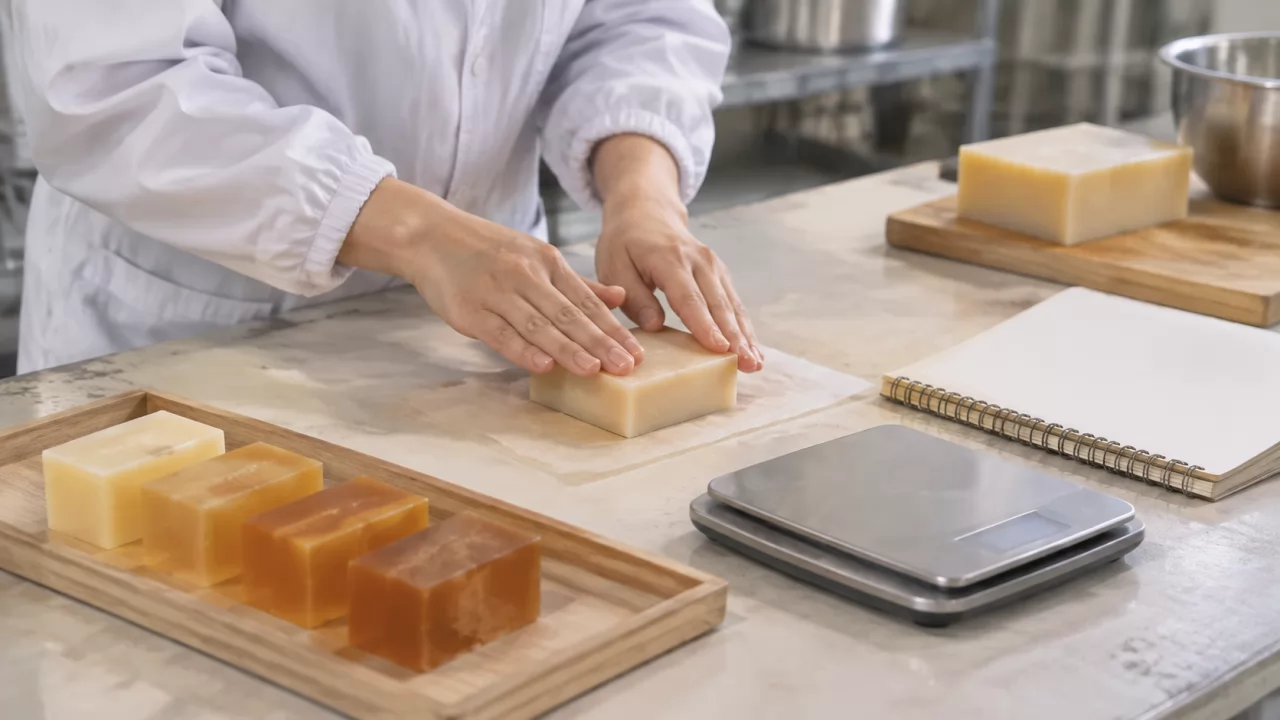
The order runs in a fixed sequence. Custom samples are typically prepared within 7–14 days, depending on formula, fragrance, appearance and packaging. The MOQ is 1000, and for OEM it applies per colour or style when no special container or accessories are involved.
| Step | What happens | What you approve |
|---|---|---|
| 1. Discuss | Customization scope agreed | Brief and claim wording |
| 2. Sample and contract | Samples sent and tested, contract signed, deposit paid | Formula, scent, delivery date |
| 3. Bulk sample | Bulk sample made, packaging designed | Colour, weight, pack artwork |
| 4. Production | Starts after bulk sample approval | Nothing further |
| 5. Inspection and shipment | Goods checked and shipped, balance paid | Inspection result |
The step most people rush is the bulk sample. Approve it carefully, since it is the last point where a colour or scent problem is cheap to fix.
Choosing by Use Case
Match the product to the job. A few rules of thumb cover most cases.
For a start-up private label line, persimmon can give you a distinct first product, provided you keep the claims modest and budget for testing. A retailer extending a body range may find it a useful mid-priced variant next to existing scented bars. Spas and gift businesses benefit most, since a named ingredient and a clear scent read well in a set and the packaging can carry the story.
For a value-focused body bar, skip persimmon. The extract and the added checks eat margin, and shoppers choosing on price rarely pay for the story. The same goes for any brand without someone who can review claims for its markets. A simple, well-scented regular bar is a better product than a persimmon bar with a risky label.
Next Step
Questions about a persimmon bar for your range are welcome; include your target market, planned quantity, claim wording and packaging idea, and ask for a sample so our team can review the brief.
FAQ
Is persimmon soap just regular soap with an extract added?
Mostly, yes. The base is often a standard soap or syndet bar, with persimmon extract as an additive. What differs is the colour behaviour, fragrance work and documentation.
Can I say it helps with body odour?
Not as a treatment claim. Describe it as a cleansing bar for people who care about body odour, and check the wording against the rules in each market you sell in.
Does persimmon extract change colour over time?
It can. Plant extracts may darken or shift hue with light, heat and age, so test the finished bar in its final packaging.
What do I need to send to start a custom formulation?
Send your market, the claims you want to make, scent and skin-feel direction, bar weight and shape, and packaging idea. Reference products help.