
Il y a quelque chose d’étrangement satisfaisant à ouvrir un tiroir et à sentir une vague de lavande ou de romarin au lieu de cette odeur de "linge oublié" et renfermé. Les sachets d’aromathérapie ne sont pas nouveaux — on glisse des herbes séchées dans des pochettes en tissu depuis des siècles. Mais dernièrement, on observe un véritable regain d’intérêt, et honnêtement, cela se comprend. Les gens en ont assez des désodorisants à brancher remplis de produits chimiques synthétiques aux noms imprononçables.
Fabriquer vos propres sachets parfumés maison ne coûte presque rien, prend à peine 20 minutes et vous donne un contrôle total sur ce qu’ils contiennent. Aucun ingrédient mystérieux. Aucun déchet plastique qui s’accumule. Juste des herbes naturelles parfumées qui font leur effet dans une simple pochette en tissu.
Comparé aux désodorisants commerciaux qui saturent une pièce de parfum artificiel pendant quelques semaines avant de s’éteindre, un sachet bien conçu offre une fragrance plus douce et plus durable. Il n’envahit pas l’espace. Il fait simplement son travail discrètement en arrière-plan — ce qui, pour la plupart d’entre nous, correspond exactement à ce que nous recherchons.
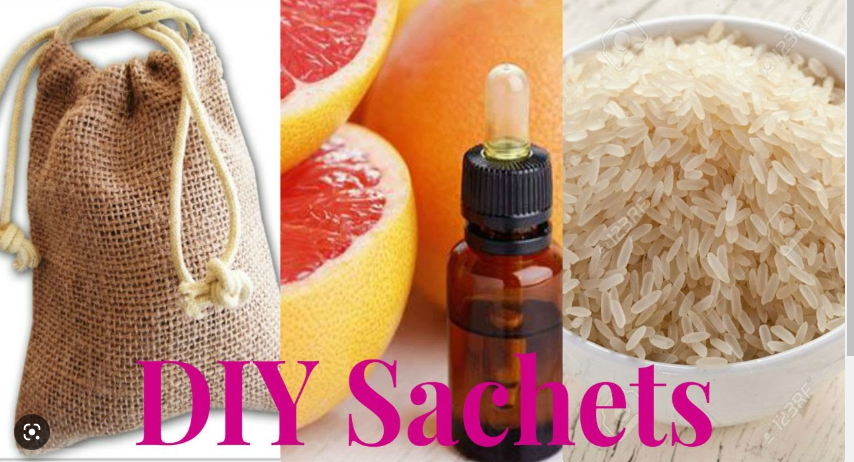
Ce dont vous aurez besoin : les matériaux essentiels en un coup d’œil
Des garnitures de pochettes en tissu qui fonctionnent vraiment
La garniture de base ne sert pas seulement à occuper de l’espace. Elle remplit deux fonctions : absorber et retenir les huiles essentielles, et permettre à l’air de circuler afin que le parfum puisse réellement s’échapper de la pochette.
Le riz est le choix le plus courant — économique, absorbant et présent dans toutes les cuisines. Les graines de lin fonctionnent également bien, avec une texture légèrement plus souple, agréable pour les sachets que vous glisserez sous un oreiller. Les copeaux de bois séchés (le cèdre est très apprécié) ajoutent leur propre parfum subtil, mais n’absorbent pas les huiles de manière aussi uniforme. Pour la plupart des débutants, le riz blanc nature est le point de départ le plus simple parmi les garnitures de pochettes en tissu.
Choisir vos herbes séchées et éléments botaniques
C’est là que les choses deviennent intéressantes. Les fleurs de lavande séchées sont le choix classique, et pour de bonnes raisons — elles conservent leur parfum pendant des mois et sont magnifiques à travers un tissu transparent. Mais ne vous arrêtez pas là. Le romarin ajoute une note propre, légèrement boisée. La camomille apporte de la douceur. Les pétales de rose offrent une douceur florale sans être envahissants. Les pointes de cèdre apportent cette qualité chaleureuse et rassurante qui fonctionne particulièrement bien dans les placards.
Mélanger les textures compte davantage qu’on ne le pense. Associer de petits boutons (comme la lavande) à de plus grands pétales (comme la rose) et à des éléments feuillus (comme le romarin) crée un intérêt visuel et permet au parfum de se développer par couches plutôt que de vous frapper d’un seul coup.
Pour l’approvisionnement, votre propre jardin est idéal si vous cultivez des herbes. Sinon, les boutiques d’herbes en vrac — locales comme en ligne — vendent des éléments botaniques séchés spécialement destinés aux loisirs créatifs. Assurez-vous simplement que ce que vous achetez n’a pas été traité avec des pesticides ou des parfums artificiels. Vous recherchez l’authenticité.
Mélanges d’huiles essentielles : le cœur de votre sachet
Les herbes séchées apportent une senteur de base, mais ce sont les mélanges d’huiles essentielles qui donnent à votre sachet tout son caractère. L’astuce consiste à choisir des huiles qui complètent vos plantes plutôt que de rivaliser avec elles. Si vous utilisez des fleurs de lavande séchées, l’huile essentielle de lavande est une association évidente — mais l’ajout de quelques gouttes de bergamote ou de bois de cèdre crée un résultat plus complexe et intéressant.
Quelques combinaisons faciles pour les débutants à essayer :
- Mélange relaxant : Lavande + camomille + une touche d’ylang-ylang
- Mélange énergisant : Menthe poivrée + citron + romarin
- Chaleur de saison : Cannelle + orange + clou de girofle (parfait pour l’automne)
Pour un sachet standard, 8 to 12 gouttes d’huile essentielle au total suffisent largement. Plus n’est pas forcément mieux ici — trop d’huile peut rendre le parfum écœurant et réduit en fait sa durée, car elle s’évapore plus vite. Vous pourrez toujours en ajouter davantage plus tard.
Options de tissu et de fermeture
La respirabilité est de loin le facteur le plus important lors du choix du tissu. La mousseline et le coton sont des valeurs sûres — abordables, respirants et faciles à coudre ou à nouer. L’organza offre un aspect élégant et laisse le parfum circuler librement, ce qui en fait un excellent choix pour les cadeaux. Le lin a un joli caractère rustique et résiste bien dans le temps.
Évitez tout tissu synthétique à tissage serré. Si l’air ne peut pas circuler à travers le tissu, votre sachet n’est en réalité qu’un sac d’herbes hermétiquement fermé qui ne sert à rien.
Pour les fermetures, les cordons coulissants sont les plus pratiques, car ils vous permettent d’ouvrir le sachet plus tard pour le raviver. De simples liens en ruban conviennent très bien pour les cadeaux. Si vous cousez, une simple couture droite en haut prend quelques secondes. Et si vous avez des chutes de tissu provenant d’autres projets, c’est une utilisation zéro déchet parfaite pour elles.
Étape par étape : assembler votre sachet
Étape 1 — Préparez et séchez vos plantes
Si vous commencez avec des herbes fraîches de votre jardin, vous devrez d’abord les faire sécher. Attachez de petits bouquets avec de la ficelle et suspendez-les à l’envers dans un endroit chaud et sec avec une bonne circulation de l’air. Un cellier, un placard ou un porche couvert conviennent très bien. Évitez la lumière directe du soleil — elle fait pâlir la couleur et peut réduire les huiles naturelles de la plante.
La plupart des herbes mettent 5 à 10 jours à sécher complètement. Vous saurez qu’elles sont prêtes lorsque les tiges se cassent nettement au lieu de plier, et que les feuilles s’effritent facilement entre vos doigts. Toute humidité résiduelle provoquera de la moisissure à l’intérieur de votre sachet, donc un peu de patience ici sera bénéfique.
Étape 2 — Préparez votre mélange de remplissage
Une bonne proportion de départ : environ 2 parts de base de remplissage (riz ou graines de lin) pour 1 part d’herbes séchées. Mettez votre base de remplissage dans un bol, ajoutez vos gouttes d’huile essentielle et mélangez le tout avec une cuillère. Ajoutez ensuite vos plantes séchées et mélangez délicatement — vous ne voulez pas écraser les pétales fragiles.
Voici une étape que la plupart des tutoriels omettent : laissez le mélange reposer dans un bocal hermétique ou un sac ziplock pendant quelques heures. J’appelle cela la méthode "secouer et laisser reposer". Secouez bien, laissez reposer, puis secouez à nouveau. Cela permet à l’huile de se répartir uniformément dans la base de remplissage au lieu de se concentrer à un seul endroit.
Étape 3 — Remplissez et fermez
Remplissez votre sachet aux deux tiers environ. Je sais qu’il est tentant de le bourrer complètement, mais un remplissage excessif comprime les matériaux et limite la circulation de l’air. Un sachet légèrement souple permet à l’air de circuler à travers le remplissage, ce qui permet réellement au parfum d’atteindre votre nez.
Pour les sachets à cordon, il suffit de serrer le lien. Pour un tissu à ouverture supérieure, repliez le bord deux fois et cousez-le pour le fermer, ou attachez-le avec un ruban ou de la ficelle. Si vous utilisez des pochettes cadeaux en organza (que vous pouvez acheter en gros pour très peu), le cordon intégré fait tout le travail.
Étape 4 — Laissez reposer pour un résultat optimal
C’est l’étape que beaucoup de gens sautent, puis se demandent pourquoi leur sachet sent peu au début. Après l’assemblage, placez votre sachet dans un endroit frais et sombre pendant 24 à 48 heures. Pendant ce temps, les huiles essentielles sont pleinement absorbées par la base de remplissage et le parfum naturel des herbes séchées se mêle au mélange d’huiles. Considérez cela comme un ragoût dont les saveurs se développent pendant la nuit.
Ne le scellez pas dans du plastique pendant cette phase de repos — posez-le simplement sur une étagère ou dans une boîte ouverte. Vous recherchez une exposition à l’air, pas une humidité emprisonnée.
Façons créatives d’utiliser vos sachets terminés
Les endroits évidents sont les tiroirs de commode et les placards, et ils y fonctionnent à merveille. Mais pensez au-delà. Glissez-en un dans votre taie d’oreiller pour un parfum subtil favorisant le sommeil. Déposez-en un dans la console centrale de votre voiture ' bien mieux que ces désodorisants en carton en forme d’arbre. Les sacs de sport bénéficient énormément d’un sachet (votre futur vous remerciera).
Pour offrir, les sachets sont étonnamment impressionnants. Associez un sachet de lavande à une bougie ou à un petit pot de miel, et vous obtenez un cadeau artisanal attentionné qui donne l’impression d’avoir demandé bien plus d’efforts qu’en réalité. Des variations saisonnières ' pin et cannelle pour l’hiver, agrumes et menthe pour l’été ' leur donnent un caractère spécial et de saison.
Comment raviver un sachet lorsque le parfum s’estompe
Après quelques mois, vous remarquerez que le parfum s’affaiblit. Avant de le jeter, essayez ces solutions :
L’option la plus simple : ajoutez 4 à 5 gouttes fraîches d’huile essentielle directement sur le sachet. Pressez-le doucement pour faire pénétrer l’huile dans le rembourrage. Pour les sachets riches en fleurs de lavande séchées ou autres éléments botaniques, écrasez doucement la pochette entre vos paumes. Cela brise les cellules de la matière végétale séchée et libère le parfum emprisonné.
La plupart des sachets peuvent être ravivés 2 à 3 fois avant que le rembourrage ne retienne plus efficacement le parfum. Après cela, compostez le contenu (après tout, tout est naturel) et recommencez avec de nouveaux matériaux.
Erreurs courantes à éviter
Utiliser des huiles parfumées au lieu d’huiles essentielles pures. Les huiles parfumées sont synthétiques et contiennent souvent des substances chimiques que vous cherchez précisément à éviter en fabriquant vos propres sachets. Vérifiez toujours l’étiquette ' les huiles essentielles pures porteront la mention "100% pure" et n’indiqueront que la source végétale.
Choisir un tissu non respirant. Le satin est joli, mais il emprisonne le parfum à l’intérieur. Si vous ne sentez pas l’air traverser le tissu lorsque vous soufflez dessus, choisissez autre chose.
Sauter l’étape de maturation. Les sachets fraîchement assemblés sentent les ingrédients séparés. Après maturation, ils dégagent le parfum d’un mélange harmonieux. La différence est perceptible.
Conserver les sachets dans du plastique hermétique. Cela emprisonne l’humidité et peut entraîner l’apparition de moisissure, surtout dans les climats humides. Conservez les sachets supplémentaires dans un contenant respirant ' une boîte en carton ou un sac en papier conviennent très bien.
Personnalisez-les à votre image
Tout l’intérêt de fabriquer vous-même des sachets d’aromathérapie, c’est qu’il n’existe aucune règle en dehors de la technique de base. Expérimentez des mélanges de saison — menthe fraîche et verveine citronnée en été, clou de girofle et zeste d’orange en décembre. Essayez des associations originales. Peut-être aimez-vous l’odeur des grains de café mélangés à la vanille. Peut-être que le thym séché vous rappelle la cuisine de votre grand-mère. C’est tout à fait valable. Utilisez-le.
Et ne vous inquiétez pas s’ils ne sont pas parfaitement présentés. Un sachet légèrement irrégulier noué avec un ruban dépareillé a plus de caractère que tout ce que vous pourriez acheter en magasin. Il n’est pas nécessaire qu’ils aient tous le même aspect ou la même odeur, et c’est précisément ce qui les rend dignes d’être fabriqués.
Questions fréquemment posées
Combien de temps durent généralement les sachets d’aromathérapie ?
La plupart des sachets bien confectionnés conservent leur parfum pendant 2 à 4 mois avant d’avoir besoin d’être ravivés. Les facteurs qui influencent leur durée de vie comprennent la qualité de vos huiles essentielles, la quantité de matières botaniques séchées utilisée et l’endroit où vous placez le sachet. Les espaces fermés, comme les tiroirs, préservent le parfum plus longtemps que les zones ouvertes avec beaucoup de circulation d’air.
Puis-je mélanger des fleurs séchées avec des mélanges d’huiles essentielles, ou vaut-il mieux choisir l’un des deux ?
Associer les deux donne de loin le meilleur résultat. Les fleurs séchées apportent une note de fond subtile et durable, tandis que les huiles essentielles offrent des notes de tête plus marquées, perceptibles immédiatement. Ensemble, elles créent un parfum nuancé qui évolue au fil du temps au lieu de s’estomper de manière uniforme.
Les sachets parfumés faits maison sont-ils sans danger pour les animaux de compagnie ?
Une certaine prudence s’impose ici. Les chats sont particulièrement sensibles aux huiles essentielles — les huiles d’arbre à thé, d’eucalyptus, de menthe poivrée et d’agrumes peuvent être toxiques pour eux. Les chiens sont généralement moins sensibles, mais doivent tout de même éviter tout contact direct avec des huiles concentrées. Conservez les sachets dans des endroits que les animaux ne peuvent ni atteindre ni mâcher, et privilégiez la lavande ou la camomille si vos animaux ont tendance à mordiller par curiosité. En cas de doute, consultez votre vétérinaire.
Quelle est la meilleure plante parfumée naturelle pour favoriser le sommeil ?
Les fleurs de lavande séchées sont la référence absolue — des recherches confirment réellement les effets apaisants de la lavande sur le système nerveux. La camomille arrive juste après, avec un parfum plus doux et légèrement sucré que beaucoup trouvent apaisant. Les combiner dans un sachet pour oreiller est probablement l’aide naturelle au sommeil la plus efficace que vous puissiez fabriquer chez vous sans dépenser un centime en compléments.
Les enfants peuvent-ils aider à les fabriquer ?
Absolument — c’est une excellente activité manuelle pour les enfants d’environ 5 ans et plus. Laissez-les choisir les fleurs séchées, mélanger les garnitures et remplir les sachets. Le seul domaine dont les adultes doivent rester responsables : la manipulation des huiles essentielles. Les huiles non diluées peuvent irriter la peau, et les enfants ont tendance à se toucher le visage. Déposez vous-même les gouttes d’huile et assurez-vous que les petites mains soient lavées ensuite. Évitez toute huile faisant l’objet de mises en garde importantes (comme l’écorce de cannelle, qui peut brûler la peau) lorsque des enfants participent.