

Le savon au kaki est discrètement passé du statut de secret japonais des soins de la peau réservé à un cercle restreint à celui d’une véritable catégorie mondiale des soins personnels. L’intérêt pour les pains végétaux désodorisants a progressé régulièrement en Amérique du Nord, en Europe et dans les États du Golfe, et la raison est simple : il est efficace et s’inscrit parfaitement dans la tendance de la beauté propre qui domine désormais les rayons des magasins.
Mais "où acheter" n’est pas une seule question—c’en sont deux. Un acheteur à la recherche d’un seul pain de savon pour résoudre un problème dans les vestiaires n’a pas du tout les mêmes priorités qu’un acheteur professionnel négociant une production de 50,000 unités en marque de distributeur. Ce guide distingue donc les deux profils, afin que vous puissiez accéder directement à la section qui vous correspond.
Pourquoi le savon au kaki suscite une demande mondiale croissante
Cette progression ne relève pas uniquement du battage marketing. Les consommateurs remplacent activement les déodorants à base d’aluminium et les savons antibactériens synthétiques par des alternatives d’origine végétale, et le kaki se situe précisément à l’intersection du "naturel" et du "fonctionnel."
Les détaillants du Moyen-Orient, où les climats chauds font de la gestion des odeurs corporelles une préoccupation toute l’année, affichent des tendances de réapprovisionnement particulièrement fortes. Les acheteurs européens, quant à eux, accordent généralement la priorité aux arguments végan et sans cruauté.
La science derrière la popularité du savon au kaki
Le mécanisme actif repose sur la teneur en tanins astringents—plus précisément les polyphénols dérivés du kaki, souvent désignés sous le nom de "tanin de kaki" ou kaki-shibu dans les formulations traditionnelles. Ces tanins se lient aux composés responsables des odeurs produits lorsque les bactéries cutanées décomposent la transpiration, notamment le nonénal, l’aldéhyde associé aux odeurs corporelles liées à l’âge et au stress.
Contrairement aux antitranspirants qui bloquent les glandes sudoripares, un savon naturel au kaki contre les odeurs corporelles correctement formulé agit en surface lors du rinçage, en neutralisant les molécules odorantes plutôt qu’en les masquant avec un parfum. C’est pourquoi il séduit les consommateurs qui recherchent une action efficace sans occlusion.
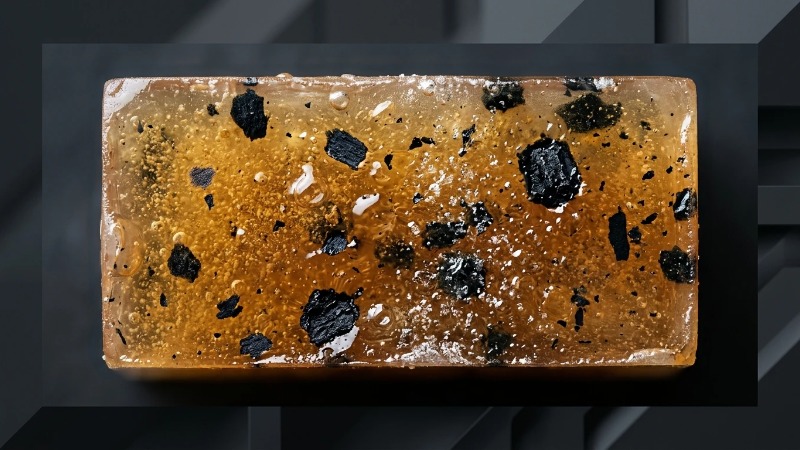
Il est important de faire preuve d’honnêteté sur ce point : les résultats dépendent fortement de la concentration en tanins et de l’association avec des ingrédients tels que les catéchines du thé ou le charbon actif. Un pain de savon bon marché contenant une simple touche d’extrait de kaki pour séduire sur l’étiquette sera moins performant, ce qui explique précisément pourquoi l’approvisionnement est déterminant.
Qui achète du savon au kaki en 2026 ?
Deux groupes distincts stimulent le marché. Le premier est constitué des consommateurs particuliers—des personnes qui achètent généralement un à trois pains de savon en ligne pour leur usage personnel. Le second regroupe les professionnels des achats B2B : propriétaires de marques de distributeur, distributeurs, entreprises de coffrets par abonnement et chaînes de magasins s’approvisionnant en gros.
La suite de ce guide s’adresse successivement à chacun de ces groupes. Si vous achetez pour votre usage personnel, la Partie 1 est faite pour vous. Si vous créez ou approvisionnez une marque, passez directement à la Partie 2.
Partie 1 : Pour les acheteurs particuliers au détail — Où acheter en ligne un savon au kaki haut de gamme
Si vous souhaitez simplement recevoir un pain de qualité à votre domicile, votre défi n’est pas la disponibilité—il consiste à distinguer les formulations authentiques des revendeurs opportunistes en dropshipping.
Places de marché en ligne et canaux de vente au détail fiables
Trois types de canaux dominent le marché. Les grandes places de marché (Amazon, eBay et leurs équivalents régionaux) offrent commodité et protection des acheteurs, mais la qualité y est très variable. Les boutiques spécialisées dans les soins de la peau et les magasins de produits importés du Japon proposent généralement des formulations plus authentiques et plus riches en tanins. Les sites Web des marques en vente directe aux consommateurs offrent habituellement la plus grande transparence concernant l’approvisionnement et les ingrédients.
En règle générale, les sites appartenant aux marques et les détaillants spécialisés dans les soins de la peau constituent votre choix le plus sûr pour trouver le meilleur savon au kaki à acheter en ligne, car leur réputation dépend du produit plutôt que de la rotation des volumes.
Ce qu’il faut rechercher dans un savon au kaki de qualité
Utilisez une courte liste de contrôle avant d’acheter. Premièrement, la transparence des ingrédients—une liste INCI complète, et non pas simplement la mention «"extrait de kaki"» dissimulée dans un texte marketing vague. Deuxièmement, vérifiez que le tanin ou l’extrait de kaki apparaît suffisamment haut dans l’ordre des ingrédients, et non en dernière position.
Troisièmement, recherchez une formulation végane et une certification sans cruauté envers les animaux si cela est important pour vous. Quatrièmement, vérifiez les informations relatives au parfum—certains pains sont sans parfum afin de préserver leur objectif désodorisant, tandis que d’autres présentent des notes subtiles. Enfin, lisez les avis mentionnant spécifiquement le contrôle des odeurs sur plusieurs semaines, et pas seulement les commentaires sur le parfum lors de la première utilisation.
Signaux d’alerte et moyens d’éviter les produits de mauvaise qualité
Méfiez-vous des annonces qui ne présentent aucune liste d’ingrédients ou des produits promettant des résultats «"médicaux"» spectaculaires. L’absence de certifications, d’informations sur le fabricant et l’utilisation de photos génériques reprises par plusieurs vendeurs sont des signes avant-coureurs d’un pain générique reconditionné.
Un prix anormalement bas constitue un autre signal d’alerte. Le tanin de kaki authentique n’est pas l’ingrédient le moins cher ; un pain vendu nettement en dessous du prix du marché en contient donc généralement très peu.
À quoi s’attendre en matière de prix pour un savon au kaki vendu au détail
Pour les acheteurs individuels, les pains de kaki haut de gamme coûtent généralement entre environ $8 et $18 par pain, selon la concentration en tanins, les actifs supplémentaires, l’emballage et le positionnement de la marque. Les lots multiples réduisent le prix unitaire.
Qu’est-ce qui justifie le prix plus élevé ? Une teneur en tanins vérifiée, des actifs de soin ajoutés, un emballage durable et des certifications de tierces parties. Si un pain de savon répond à ces critères et tient pendant un mois d’utilisation quotidienne, le supplément de prix est généralement justifié.
Partie 2 : Pour les acheteurs B2B — Approvisionnement en savon au kaki en vrac & sous marque distributeur
La conversation change complètement. Si vous vous approvisionnez pour revendre—que ce soit sous votre propre marque ou pour la distribution—vos priorités se déplacent vers l’économie par unité, la conformité, la régularité et le partenariat de fabrication. C’est ici que la stratégie d’approvisionnement détermine votre marge et la réputation de votre marque.
Pourquoi les acheteurs B2B devraient envisager les fabricants chinois
Pour les volumes importants, les fabricants chinois restent le choix le plus rationnel pour la plupart des marques qui se lancent dans cette catégorie ou qui cherchent à la développer. La raison n’est pas seulement le prix—c’est aussi la maturité de la chaîne d’approvisionnement des produits de soins personnels, développée au fil de plusieurs décennies.
Les usines chinoises établies offrent des capacités intégrées : formulation en interne, moulage, remplissage, conditionnement et logistique d’exportation sous un même toit. Cette intégration verticale permet de proposer des prix compétitifs sans les compromis sur la qualité que les acheteurs redoutent parfois.
Avantages de coûts sans compromis sur la qualité
Le calcul de la marge est simple. L’approvisionnement en production de savon en pain au kaki en vrac OEM auprès d’une usine chinoise compétente vous permet généralement d’obtenir un coût rendu laissant une marge confortable entre le prix de gros et le prix de détail. Les lignes de production automatisées réduisent le coût de main-d’œuvre par unité tout en maintenant un poids, une dureté et une charge parfumée constants sur les grandes séries.
La régularité est l’aspect sous-estimé. Une marque de détail peut supporter un coût unitaire légèrement plus élevé, mais elle ne peut pas survivre aux variations d’un lot à l’autre qui entraînent des retours et des avis d’une étoile.
Les certifications importantes pour la conformité internationale
Avant de signer quoi que ce soit, confirmez les certifications légalement et commercialement requises sur votre marché cible. En Amérique du Nord, la conformité aux exigences de la FDA pour la fabrication de cosmétiques est attendue. En Europe, l’alignement sur les BPF (en particulier les BPF cosmétiques ISO 22716) et une documentation de sécurité appropriée sont essentiels.
SMETA est de plus en plus exigée par les grands distributeurs et les distributeurs du Moyen-Orient comme preuve de pratiques de travail éthiques et d’audits de la chaîne d’approvisionnement. Un fournisseur possédant simultanément les certifications GMP, ISO, FDA et SMETA témoigne d’une usine conçue pour l’exportation, et non uniquement pour l’approvisionnement du marché intérieur.
Critères clés pour sélectionner un fabricant de savon au kaki en marque privée
Traitez la sélection des fournisseurs comme un audit, et non comme une simple demande de devis. Le cadre suivant permet de distinguer les partenaires fiables des courtiers qui revendent la production d'un tiers.
Capacité de production et délais
Vérifiez l'empreinte réelle de l'usine, le nombre de lignes automatisées et les effectifs—ces éléments déterminent si un fournisseur peut réellement respecter vos dates de livraison en haute saison. Renseignez-vous sur la flexibilité des MOQ ; une usine qui n'accepte que des commandes très importantes représente un risque pour une marque en lancement.
Confirmez par écrit les délais de réalisation des échantillons et de production en volume. Pour un fabricant véritable, les délais réalistes sont d'environ une à deux semaines pour des échantillons personnalisés et d'environ un mois pour la production en volume, selon la complexité.
Capacités de personnalisation
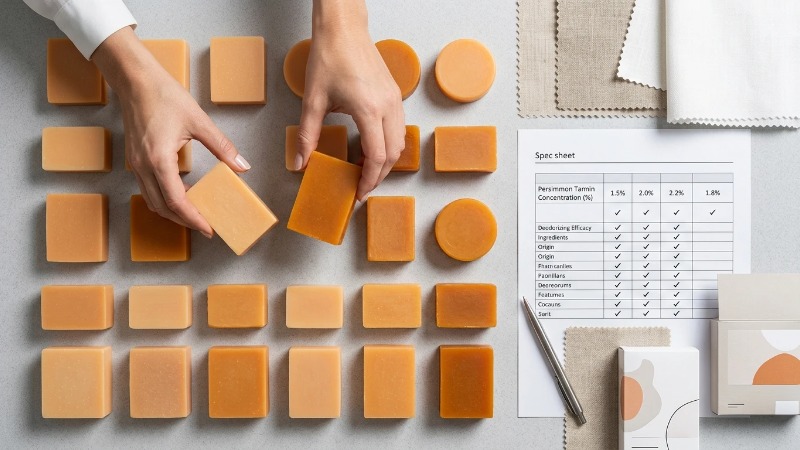
Un véritable partenaire OEM\/ODM doit proposer des moules personnalisés, des concentrations ajustables de tanins et d'actifs, le développement de parfums, différentes options de colorants et la conception des emballages. Demandez s'il peut produire des formulations véganes et éviter les tests sur les animaux—il s'agit désormais d'une exigence de base dans la distribution occidentale.
L'étendue des possibilités de personnalisation vous indique si vous avez affaire à un formulateur ou simplement à un opérateur de réétiquetage.
Vérification du contrôle qualité et des certifications
N'acceptez pas les images de certificats sans vérification. Demandez les numéros des certificats et vérifiez-les, lorsque cela est possible, auprès des organismes émetteurs. Demandez à connaître le processus de contrôle qualité de l'usine : inspection des matières premières, contrôles en cours de production et tests des produits finis.
Un audit de l'usine—à distance ou sur site—ainsi qu'un échantillon de référence signé avant la production en série constituent vos meilleures protections contre les mauvaises surprises.
Découvrez Boymay : un partenaire fiable pour la fabrication de savons au kaki
Si vous êtes un acheteur B2B qui passe en revue la liste ci-dessus et recherchez un fabricant qui la respecte réellement, Boymay mérite un échange direct. Nous avons consacré des décennies à bâtir exactement le type d’organisation prête à l’exportation que cette catégorie exige.
Plus de 30 ans d’expertise OEM/ODM depuis 1995
Depuis 1995, Boymay se concentre sur la fabrication OEM/ODM d’éponges de bain, de gels douche et de produits de soins personnels. Cette longévité signifie que nos équipes de formulation et de production ont vu les tendances produits évoluer à plusieurs reprises—et savent comment transformer le cahier des charges d’une marque en un pain stable et expédiable.
Nos atouts industriels en un coup d’œil
- Usine de 40,000 m² équipée de 16 lignes de production automatisées
- 200+ employés qualifiés dans les domaines de la formulation, de la production et du contrôle qualité
- Certifications GMP, ISO, FDA et SMETA reconnues à l’international
- Expérience avérée dans l’approvisionnement de marques et de distributeurs internationaux
Ce sont les mêmes critères que nous recommandons aux acheteurs d’exiger de tout fournisseur. Nous les publions parce qu’ils résistent à la vérification.
Des conditions flexibles et adaptées aux acheteurs
- MOQ faible à partir de 1,000 unités—pratique pour lancer et tester une gamme
- Échantillons personnalisés généralement préparés sous 7–14 jours, selon la formule, le parfum, l’apparence et l’emballage
- Délai de production en grande série de 25–30 jours
- Options de formulation véganes et sans cruauté, avec un haut niveau de personnalisation, notamment des moules sur mesure
La faible MOQ est plus importante que ne le réalisent la plupart des acheteurs. Elle permet à une marque en croissance de valider sur le marché une référence de savon au kaki avant de s’engager sur des volumes à six chiffres.
Comment demander un devis ou un échantillon
Si vous évaluez des fournisseurs de savon au kaki en gros ou recherchez un fabricant fiable de savon au kaki en marque blanche, contactez directement Boymay. Partagez votre formulation cible, votre orientation olfactive, votre concept d’emballage et votre volume, et notre équipe vous transmettra un devis ainsi qu’un plan d’échantillonnage. Ensuite, un échantillon de référence permettra de tout confirmer avant le début de la production en grande série.
Questions fréquemment posées
Q : Où les particuliers peuvent-ils acheter du savon au kaki haut de gamme en ligne ?
R : Les acheteurs particuliers devraient privilégier les sites web détenus par les marques ainsi que les détaillants spécialisés en soins de la peau ou en produits importés du Japon, plutôt que les annonces génériques des places de marché. Ces canaux offrent généralement une transparence complète sur les ingrédients, des certifications vérifiées et des avis faisant référence à un contrôle réel des odeurs—les signes distinctifs d’un produit authentique à forte teneur en tanins.
Q : Quelle est la quantité minimale de commande pour du savon au kaki en gros ?
R : La MOQ varie selon le fabricant, mais elle ne doit pas forcément être prohibitive. Boymay, par exemple, accepte les commandes à partir de 1,000 unités seulement, ce qui permet aux marques de tester une nouvelle gamme de savons au kaki sans engagement initial excessif.
Q : Combien de temps faut-il pour fabriquer un savon au kaki sur mesure ?
R : Les délais dépendent de la complexité. Chez Boymay, les échantillons personnalisés sont généralement prêts sous 7–14 jours en fonction des exigences relatives à la formule, au parfum, à l’apparence et à l’emballage, tandis que la production en grande série dure environ 25–30 jours une fois l’échantillon de référence approuvé.
Q : Le savon au kaki peut-il être vegan et non testé sur les animaux ?
R : Oui. Le savon au kaki peut être formulé entièrement à base de composants vegan et fabriqué sans expérimentation animale. Boymay propose des options de formulation vegan et non testées sur les animaux dans le cadre de ses capacités de personnalisation, en phase avec les attentes de la beauté clean dans la distribution nord-américaine et européenne.
Q : Pourquoi choisir un fabricant chinois plutôt que des fournisseurs locaux ?
R : Pour les acheteurs B2B, les fabricants chinois établis associent des prix compétitifs à des chaînes d’approvisionnement matures et intégrées verticalement, ainsi qu’à des certifications conformes aux normes d’exportation telles que GMP, ISO, FDA et SMETA. Il en résulte de meilleures marges et une qualité constante à grande échelle—des avantages difficiles à égaler pour de petits producteurs locaux sur des volumes importants.
Q : Le savon au kaki est-il efficace contre les odeurs corporelles ?
R : Les tanins du kaki sont des polyphénols astringents qui se lient aux composés responsables des odeurs, notamment le nonénal, produit lorsque les bactéries cutanées décomposent la transpiration. Lorsqu’il est formulé à une concentration adéquate, le savon au kaki neutralise les odeurs lors du rinçage plutôt que de simplement les masquer, ce qui explique sa popularité pour la gestion quotidienne des odeurs corporelles.